Welcome to WordPress. This is your first post. Edit or delete it, then start writing!
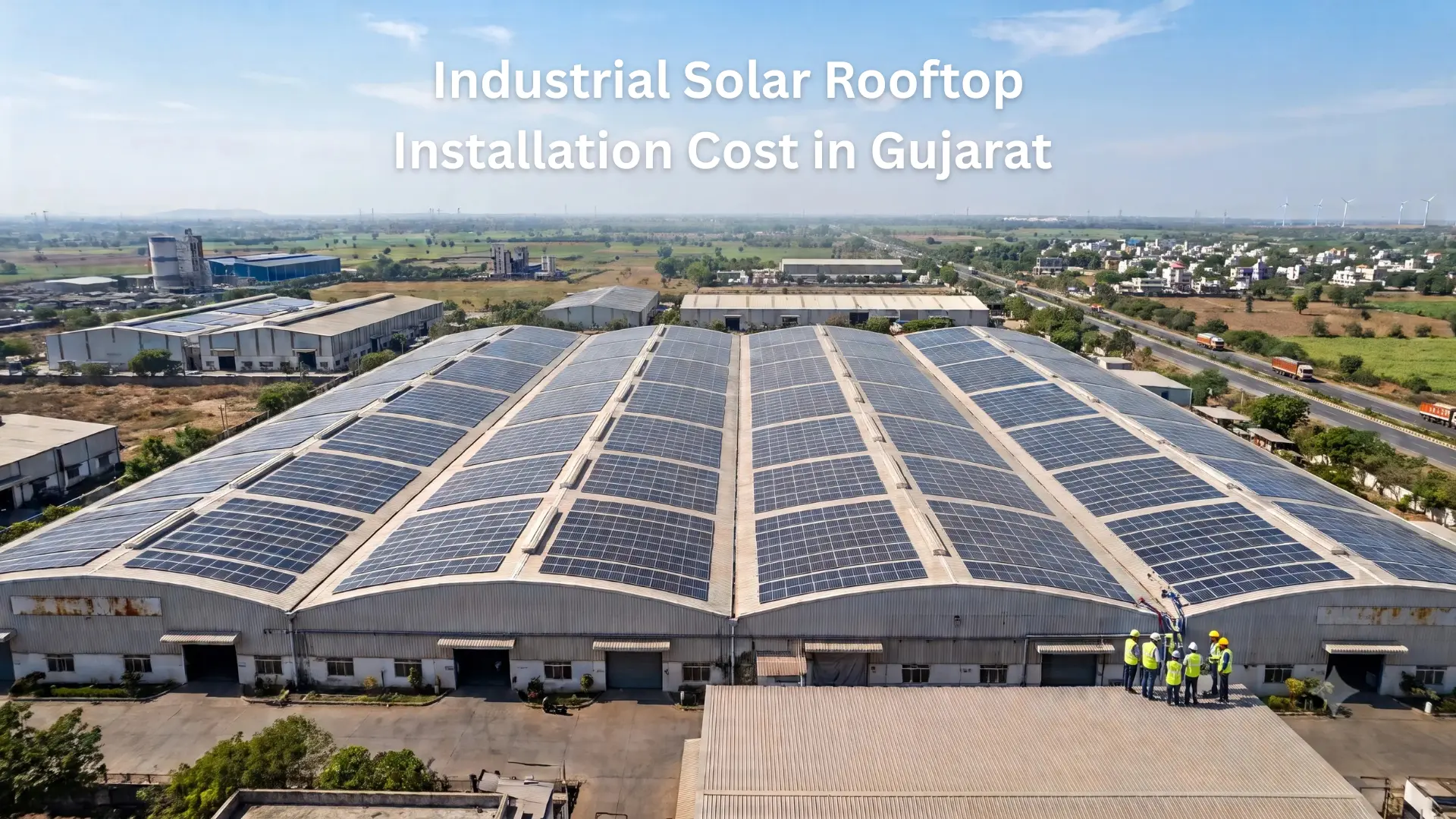
Electricity is one of the biggest operating expenses for many industries in Gujarat. Whether you run a textile unit in Surat, a ceramic plant in Morbi, a pharmaceutical facility in Ahmedabad, or an engineering factory in Vadodara, rising electricity costs directly impact profitability.
This is one of the main reasons why industrial rooftop solar installations are growing rapidly across Gujarat.
However, before investing in solar, most business owners, plant managers, and decision-makers want clear answers to practical questions:
This guide answers all these questions in simple language so you can evaluate whether rooftop solar is the right investment for your business.
The cost of an industrial rooftop solar project depends on several factors, including project size, solar panel technology, inverter selection, roof type, electrical infrastructure, and installation complexity.
As a general estimate:
|
System Size |
Estimated Project Cost Range |
|
100kW |
₹35 Lakh – ₹50 Lakh |
|
250kW |
₹80 Lakh – ₹1.2 Crore |
|
500kW |
₹1.5 Crore – ₹2.5 Crore |
|
1MW |
₹3 Crore – ₹5 Crore |
These figures are indicative only and should not be considered final quotations. The actual investment depends on site-specific requirements and component selection.
The best way to determine project cost is through a detailed site survey and energy assessment.
Many businesses compare projects based only on the cost per kilowatt. While pricing is important, several factors influence the overall investment.
The type of solar panel selected has a significant impact on project cost and long-term performance.
For industries with limited roof space, higher-efficiency technologies may provide greater value over the system’s lifespan.
Installation costs vary depending on the roof structure.
Industrial solar systems rely heavily on inverter performance.
Factors affecting inverter selection include:
Quality inverters often provide better reliability and long-term performance.
Industrial projects require additional safety and protection equipment, such as:
These components are essential for safe and reliable operation.
One of the most common questions from industrial buyers is:
“What is the cost per kW?”
The answer depends largely on project size.
Larger projects generally benefit from economies of scale.
|
Project Capacity |
Typical Cost Per kW Trend |
|
50kW – 100kW |
Higher |
|
100kW – 500kW |
Moderate |
|
500kW+ |
Lower |
This is because engineering, design, logistics, and installation costs are spread across a larger system capacity.
Roof availability is often one of the first factors evaluated during an industrial solar assessment.
Approximate roof space requirements:
|
Solar Capacity |
Approximate Roof Area |
|
100kW |
8,000 – 10,000 sq. ft. |
|
250kW |
20,000 – 25,000 sq. ft. |
|
500kW |
40,000 – 50,000 sq. ft. |
|
1MW |
80,000 – 1,00,000 sq. ft. |
The exact requirement depends on panel efficiency, mounting design, spacing, and roof layout.
A detailed site survey provides a more accurate estimate.
This is often the most important question after cost.
Under favorable sunlight conditions in Gujarat, industrial rooftop solar systems can generate substantial amounts of electricity throughout the year.
Typical generation estimates:
|
System Size |
Approximate Daily Generation |
|
100kW |
400 – 500 Units |
|
250kW |
1,000 – 1,250 Units |
|
500kW |
2,000 – 2,500 Units |
|
1MW |
4,000 – 5,000 Units |
Solar power generation depends on solar irradiation, system design, panel orientation, seasonal weather conditions, and regular maintenance. Better sunlight, proper panel placement, and good maintenance help maximize energy production.
For most businesses, solar is ultimately a financial decision.
The potential savings depend on:
Textile factories typically have high daytime consumption, making them well-suited for rooftop solar.
Potential benefits include:
Machinery-intensive operations often consume significant energy during production hours, aligning well with solar generation.
Large roof areas combined with daytime energy consumption make warehouses attractive candidates for solar installations.
Pharma facilities often operate continuously and can benefit from predictable long-term energy costs.
One of the strongest advantages of industrial rooftop solar is the long-term return on investment.
While every project is unique, many industrial solar projects achieve payback within approximately 3 to 6 years.
Key factors influencing ROI include:
Once the investment is recovered, the solar system continues generating electricity for many years.
Quality solar panels can provide operational lifespans of 30 years or more, creating long-term value for businesses.
This is an area where many businesses get confused.
The PM Surya Ghar Yojana is primarily designed for residential rooftop solar installations.
Industrial and commercial rooftop solar projects generally do not receive the same residential subsidy benefits.
However, industrial solar projects can still deliver attractive financial returns through:
Businesses should evaluate projects based on overall ROI rather than subsidy availability alone.
When comparing solar with traditional grid electricity, many businesses focus on long-term economics.
Grid electricity tariffs can increase over time.
A rooftop solar installation helps businesses generate a portion of their electricity requirements from a fixed capital investment, reducing exposure to future tariff increases.
For many industries, this predictability is just as valuable as the direct savings.
A professionally designed and installed solar system should not damage a structurally sound roof.
A roof assessment is typically conducted before installation.
Solar systems continue generating electricity during monsoon periods, although generation may be lower due to reduced sunlight.
Routine maintenance generally includes:
Regular maintenance helps maximize energy generation and system life.
Standard grid-connected solar systems automatically shut down during grid outages for safety reasons.
Businesses requiring backup power may consider hybrid or battery-based solutions.
Industries commonly adopting rooftop solar in Gujarat include:
These sectors often have large roofs and significant daytime electricity consumption
Gujarat continues to be one of India’s leading solar states because of:
Industrial hubs such as Ahmedabad, Surat, Vadodara, Rajkot, Bharuch, Ankleshwar, Sanand, and Morbi are seeing increasing adoption of rooftop solar solutions.
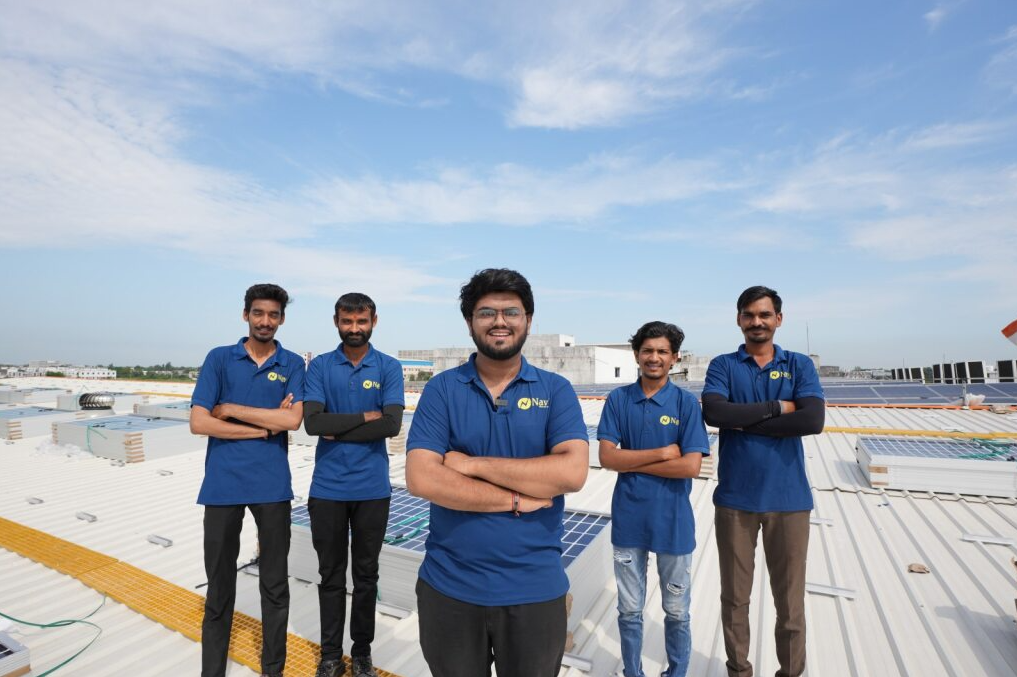
At Navi Energy, we believe every industrial project should start with understanding the customer’s energy requirements.
Our approach focuses on:
The objective is not simply to install solar panels, but to help businesses make informed energy decisions that deliver long-term value.
What is the cost of a 100kW solar plant in Gujarat?
The cost typically depends on technology selection, roof conditions, and project requirements. A detailed site assessment provides the most accurate estimate.
What is the cost of a 500kW solar plant?
Project costs vary significantly depending on design and component selection. Most projects require a customized quotation.
How much roof space is required?
Approximately 80–100 sq. ft. per kW is often used as a preliminary estimate, though actual requirements vary.
Can solar run industrial machinery?
Solar can offset electricity consumption used by industrial operations. The extent depends on system size and load profile.
What is the payback period?
Many industrial rooftop solar projects achieve payback within approximately 3–6 years, depending on project economics.
How long does an industrial solar system last?
Quality solar panels can continue generating electricity for 30 years or more with proper maintenance.
Industrial rooftop solar is no longer viewed only as a sustainability initiative. For many businesses in Gujarat, it has become a strategic investment that helps reduce operating expenses, improve energy cost predictability, and strengthen long-term competitiveness.
Before investing, it is important to evaluate roof availability, energy consumption patterns, project economics, and long-term business goals. A properly designed solar system should not only generate electricity it should support the financial and operational objectives of the business for decades to come.
Contact Navi Energy for your requirements.
306, Sunshine complex, Sudama chowk, Mota varacha., Surat, Gujarat 394101
Whether it’s your home or your business, it’s time to switch to clean and cost-saving solar energy. Our expert team provides hassle-free Solar installation across Gujarat, built for long-term savings and reliable power.